

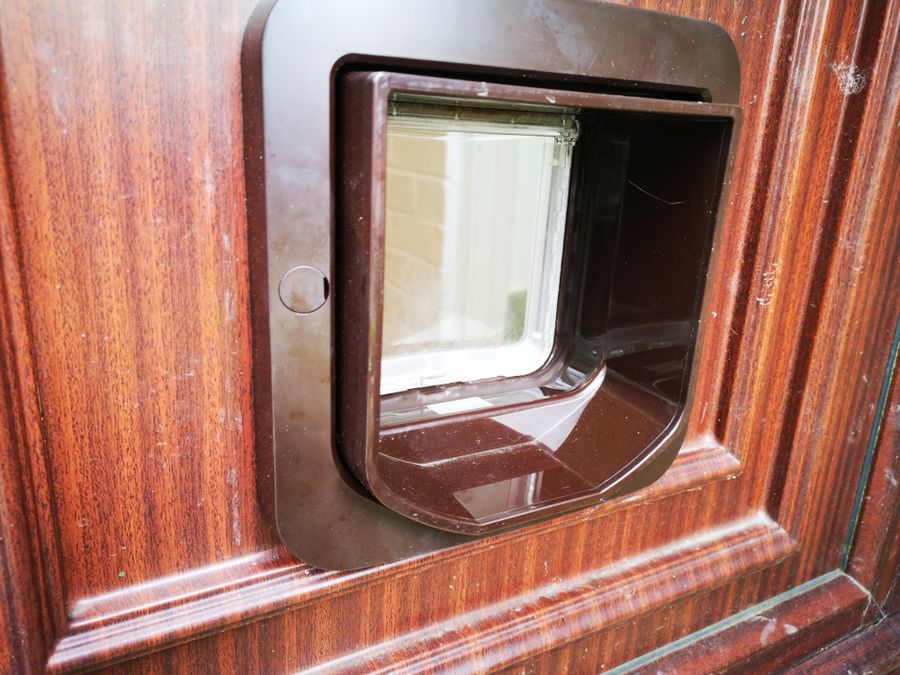
A normal pet flap gives any small animal a possible way into the house. A microchip pet door changes that opening into a controlled entrance. It reads an approved pet’s implanted chip or matching collar tag before releasing the lock, while strays and many wild visitors meet a closed flap. Current connected models add schedules, phone controls, and activity notices, giving owners more ways to protect the home without taking away a pet’s daily freedom.
How a Pet’s Microchip Becomes Its Door Key
A pet microchip is a small electronic device placed under the skin. It carries a unique identification number rather than a pet’s name, medical file, or live location. It isn’t GPS and can’t show where an animal is traveling. When the chip comes close to a compatible reader, however, that number can identify the pet.
A microchip door stores approved identification numbers in its memory. When a registered pet approaches from outside, the reader checks the chip and releases the lock. An animal with an unknown number can push against the flap, but the locking catch remains in place. The implanted chip becomes a key that can’t be dropped in the yard or lost with a collar.
The Connected Model Uses Selective Entry
The current SureFlap Microchip Pet Door Connect is made for large cats and small dogs. Its reader sits on the exterior side, so the access check happens when an animal tries to enter. A recognized chip or approved RFID collar tag unlocks the flap. An unregistered cat or other visitor can’t trigger the same response.
This model uses selective entry rather than individual control in both directions. Any animal on the indoor side can exit when the door is operating normally. That matters in a home with an indoor-only pet. The door can stop unknown animals from coming in, but its exterior reader won’t identify which household pet is trying to leave.
Owners who need tighter exit control should choose a model designed for separate entry and exit permissions or keep the pet door locked when an indoor-only animal can reach it. Product names can sound similar, so the reader’s location and direction of control matter as much as the word “microchip.”
App Controls Add Another Layer of Protection
The connected door communicates with a separate hub, which connects to a home router. Through the companion app, an owner can lock or unlock the flap from another room or while away. The app can also send a notice when a registered pet enters or leaves.
Remote control can help when conditions suddenly change. An owner may lock the door during a storm, after seeing wildlife near the yard, or before a service worker opens a gate. The chip still decides whether an approaching animal is recognized, while the app determines whether the door should be available at that time. Both conditions must be right for normal access.
Curfews Reduce Nighttime Intrusions
A curfew tells the SureFlap Microchip Pet Door Connect when to lock and unlock. This can help keep a pet indoors after dark, when stray cats and wild animals may be more likely to approach the house. The door’s controls allow owners to set designated locking and unlocking times.
A practical setup could allow outdoor access during the day, switch to entry-only near dusk, and remain locked after the pet returns. Owners should confirm the exact lock mode rather than assuming “locked” and “in-only” mean the same thing. A simpler nonconnected SureFlap pet door also offers timed locking, stores up to 32 pet identities, and keeps those identities in memory when its batteries are removed.
Activity Tracking Isn’t Standard on Every Door
The SureFlap Microchip Cat Flap Connect can send phone notifications when a registered cat enters or leaves. Through the separately sold Sure Petcare Hub, the app can also show whether registered pets are home and provide longer-term activity reports.
The PetSafe Microchip Cat Door doesn’t list an app, phone alerts, or an activity log among its features. It focuses on selective entry, storage for up to 40 registered pets, and four manual lock settings. Owners who want movement notices therefore need to choose a model that specifically advertises app-based tracking rather than assuming all microchip doors record activity.
Installation Requirements Vary by Model
The Cat Mate Elite Microchip Cat Flap with Timer Control, model 355W, is listed for wooden doors, UPVC or metal doors, walls, and single- or multi-pane glass. Its built-in tunnel can line an opening up to four inches thick, while deeper wall installations require additional wall-liner sections.
Glass, masonry, and metal installations may be more difficult than cutting a standard wooden door. A professional installer can help prevent damage to the door or surrounding material when specialized cutting or added adapters are required.
Battery Needs Also Differ Between Models
The PetSafe Microchip Cat Door uses four non-rechargeable AA alkaline batteries. PetSafe lists battery life of up to 12 months, depending on use, and includes a low-battery indicator. The manufacturer doesn’t list app connectivity for this model, so there’s no network or phone connection to restore after the batteries are changed.
The Cat Mate Elite Microchip Cat Flap with Timer Control 355W also uses four AA batteries and lists approximately 12 months of operation. By comparison, the SureFlap Microchip Cat Flap Connect uses four AA batteries but lists battery life of up to six months.
Battery estimates aren’t guarantees. Owners should respond to the model’s low-power warning, replace all batteries at the same time, and then test the flap with each registered pet. Connected models should also be checked in the app to confirm that notifications and remote controls are working again.
What Microchip Doors Can’t Prevent
A microchip pet door controls one entrance, but it can’t manage everything that happens around it. An approved pet may still bring dirt, leaves, or prey indoors, and another animal could slip through if it follows closely before the flap closes.
It also won’t solve problems elsewhere around the home. Open windows, damaged screens, loose vents, and gaps beneath fences can still give animals another route inside or allow a pet to escape.
Owners also need a separate plan for pets that shouldn’t go outdoors. A microchip door may block unfamiliar animals from entering, but that doesn’t automatically mean it can stop every household pet from leaving.
Help Your Pet Learn to Use the Door
Even a well-installed microchip door may confuse a pet at first. The unlocking click, moving flap, and narrow opening can feel unfamiliar, especially to a nervous cat or small dog. Start by holding the flap open and placing treats or a favorite toy on the other side. Let the pet move through at its own pace rather than pushing it toward the opening.
Once the pet crosses comfortably, lower the flap partway so it brushes lightly against its back. The final step is allowing the door to unlock and swing normally. Several short practice sessions are usually less stressful than one long lesson. Keep the area around the door quiet and clear so the pet can focus on learning the new route.
A Smarter Opening, Not an Open Invitation
Microchip pet doors fix a clear weakness in ordinary flaps: they make an animal prove it belongs before the lock releases. Connected models add remote controls, schedules, and activity notices, while simpler versions provide selective entry without a home-network setup.
The best result comes from matching the opening to the pet, checking chip compatibility, installing the frame correctly, and understanding which direction the reader controls. With those steps in place, a pet can keep its independence without giving every neighborhood animal the same invitation.