

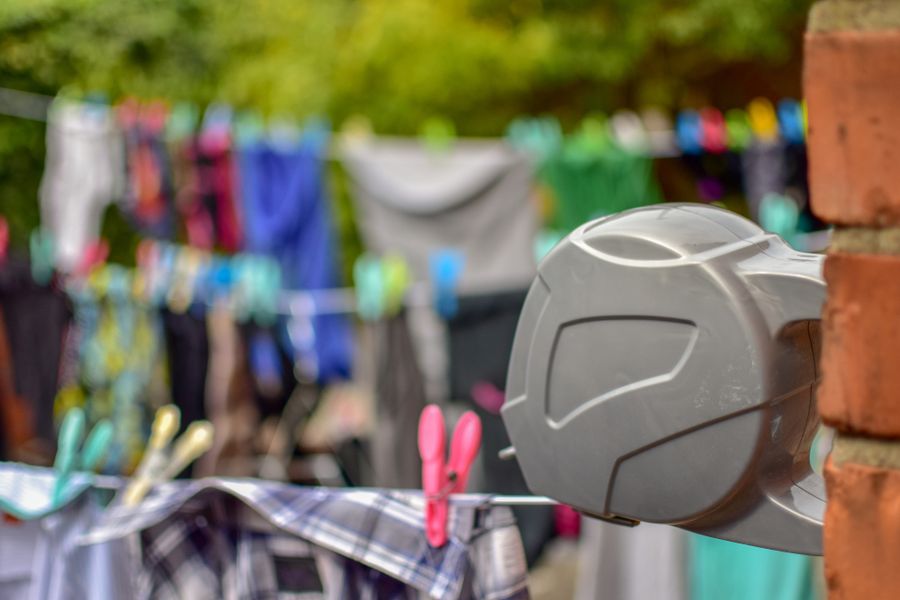
An outdoor retractable clothesline provides a practical way to reduce dryer use without leaving permanent poles and wires across the yard. However, choosing the right system involves more than comparing its size or number of lines. The mounting surface, drying capacity, weather resistance, required hardware, and availability of replacement parts can all affect setup and long-term use. A suitable clothesline should match both the household’s laundry needs and the available outdoor space.
A Simple Way to Compare Outdoor Clotheslines
Start with the space available in the yard. Rule out any clothesline that cannot be mounted safely between the chosen anchor points. Then check whether it offers enough drying space for a normal load of laundry.
Next, look at the materials and repair options. Choose parts that can handle outdoor weather, and check whether the line or hardware can be replaced. Finally, add the cost of posts, fasteners, covers, and installation. This helps prevent a low-priced system from becoming a poor long-term choice.
Four Criteria That Matter Most
The four criteria below work together. A large-capacity line is not useful if the yard lacks a safe anchor, while strong materials may not justify a higher cost if the system is used only for occasional towels or bedding.
1) Mounting Location and Retraction Path
Retractable systems need two secure points: the main housing and the receiving bracket, hook, or post. A wall-to-wall setup may be the simplest when two solid structures face each other. Wall-to-post and post-to-post layouts create more placement choices, but they can add excavation, concrete work, separate posts, and more permanent changes to the yard.
Measure the complete extension path before buying. Check for gates, trees, air-conditioning equipment, grills, walkways, and doors that could block the line or place wet laundry where people need to pass. Also confirm that the receiving point can keep the cords level enough to limit sag.
Quick test: Mark both anchor points with painter’s tape, then walk the full route while imagining the line extended and loaded.
2) Usable Capacity, Not Just Line Count
Drying capacity depends on total line length, the distance between cords, and the size of the items being hung. Five long lines can hold more than several short lines, but a long span can also sag more when loaded. Sheets and bath towels need enough uninterrupted length, while shirts and smaller garments can use shorter sections more efficiently.
Manufacturer capacity descriptions can help create a starting point. One wall-mounted folding system provides 79 feet of drying space and is described as holding more than two machine loads, with longer outer lines for larger pieces (Brabantia). The useful question is not whether another model has more cords, but whether its line layout matches the household’s common loads.
Quick test: Place one normal wet load in a basket and estimate how many feet of line its largest items would require without overlapping.
3) Outdoor Materials and Exposure Protection
Weather-resistant materials should be judged as a system. The cabinet, fasteners, tension parts, cords, hooks, and receiving bracket all face moisture, sunlight, dirt, and temperature changes. A metal housing may provide a firm base, but exposed screws or low-grade internal springs can still become weak points. UV-resistant cord and a cover can also reduce direct exposure when the unit remains outdoors.
Construction claims should be specific. A current five-line model sold for outdoor use has an aluminum housing and extends as far as 34 feet, showing how material and span can vary even within the same product category (The Home Depot). Homes near salt air, heavy rain, or intense sun should place more weight on protected hardware and replaceable parts than homes with a covered porch.
Quick test: Identify which parts will remain exposed when the line is retracted and whether each can be covered, cleaned, tightened, or replaced.
4) Full Ownership Cost and Replacement Risk
The shelf price covers only the parts inside the package. A wall-mounted unit may still require masonry anchors, exterior-grade screws, blocking behind siding, or professional help. A yard installation can require posts, ground sockets, concrete, digging tools, and a way to keep the unit level. Accessories such as clothespins and protective covers may also be separate.
Replacement risk matters because retractable systems include moving parts. Cords can fray, springs can lose tension, and brackets can loosen under repeated loads. A system with available replacement line, hardware, or service support may cost more at first but avoid replacing the complete unit after one component fails.
Quick test: Before ordering, list every required part that is not clearly included and check whether the cord, tension parts, and mounting hardware can be replaced separately.
What People Commonly Get Wrong
A common mistake is treating advertised line length as guaranteed working capacity. Total footage does not show how much weight the system can handle, how far the lines can extend without sagging, or whether several large items can hang without touching. Capacity should be matched to the laundry itself, not only to the largest number printed on the package.
Another mistake is assuming that “hardware included” means the unit can attach safely to any exterior surface. Fasteners intended for solid masonry may not suit vinyl siding, hollow block, or a wall without structural backing. The mounting instructions should identify acceptable surfaces and loading limits. If the structure is uncertain, the installation question needs to be solved before the product is selected.
Three Situations, Three Different Priorities
For a small patio with a solid exterior wall:
Mounting fit should receive the most weight because the available path is short and fixed. A compact wall-mounted or folding design can keep the area open between laundry days, but the buyer accepts less flexibility if furniture or doors later move into the extension path.
For a family drying several full loads each week:
Capacity and tension should lead the decision. A multiline system with a longer span can reduce the need to split loads, but it may require posts, stronger anchors, and more open yard space than a compact wall unit.
For a home in a wet, sunny, or coastal area:
Materials and replacement risk deserve priority. Protected fasteners, UV-resistant cord, corrosion-resistant parts, and a cover can reduce exposure, but stronger construction may raise the initial purchase and installation cost.
Cost, Installation, and Replacement Risk
Compact single-line systems may provide less drying room than larger multiline models. For example, the Leifheit Rollfix 80 has one line that extends up to eight meters and is intended to hold one machine load. The five-line Rollfix 210 provides 21 meters of drying space and is designed for two loads, but it also uses a larger retraction and tensioning system.
Installation can add parts that are not included with the clothesline itself. A wall-to-post or post-to-post setup may require a separate post kit. Hills' retractable post can be installed in a concrete pad or placed in a separately sold ground socket. Buyers should identify the required posts, sockets, fasteners, and mounting parts before comparing the full cost of different systems.
Replacement options can also affect long-term value. Hills uses individual line spools in its current retractable clotheslines, allowing a failed line mechanism to be replaced without buying a complete new unit. Before installation, check whether replacement lines, spool assemblies, brackets, or other model-specific parts are available and confirm that they fit the exact system being considered.
Frequently Asked Questions
Can a retractable clothesline be mounted to siding?
Possibly, but the siding itself should not be treated as the structural anchor. The fasteners normally need to reach solid framing, masonry, or suitable blocking behind the exterior surface. Follow the product instructions and use professional help when the wall structure is unclear.
Should the line remain extended between laundry days?
Retracting the cords can reduce exposure and keep the yard clear. The lines should be dry and free of dirt before they enter the housing, since trapped moisture or debris may affect the cord and internal mechanism over time.
Is a single long line better than a multiline system?
A single line can suit occasional items and narrow spaces, while several lines provide more total hanging room in one setup. The better choice depends on load size, anchor strength, available span, and how much sag the user is willing to manage.
Choose the System Your Yard Can Support
Start with the mounting path, then compare the capacity needed for a normal laundry load. After confirming the location, inspect the exposed materials, replacement options, and extra installation parts that shape long-term cost. Measure the proposed anchor points before choosing a system, since a good physical fit is the first requirement for dependable outdoor drying.